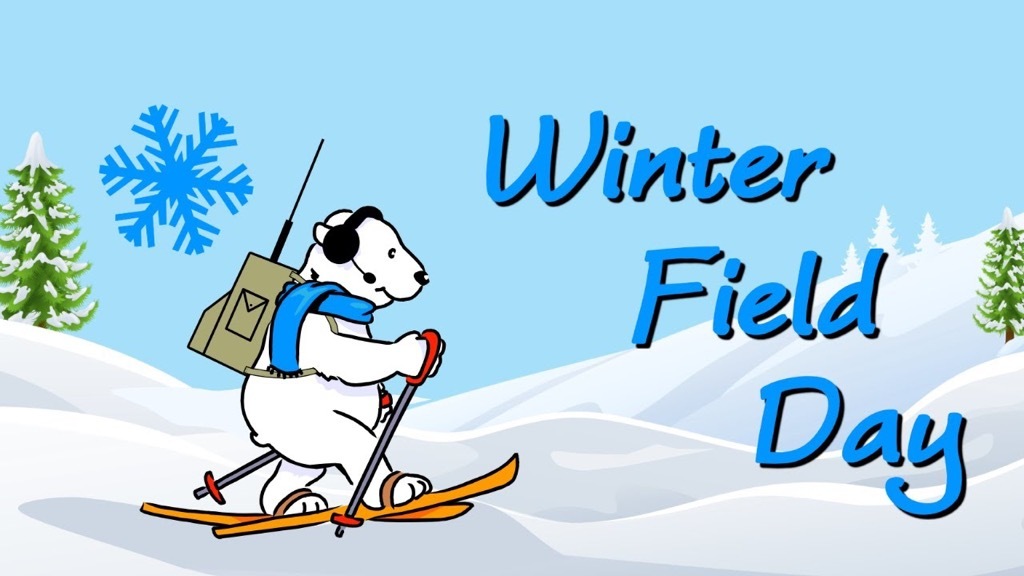
Winter Field Day…. Challenging Amatuer Radio Operators In Adverse Conditions
Winter Field Day takes place on the last full weekend of January. In 2026, that is January 24 and 25. Amateur radio operators across the country set up temporary stations and make contacts under real winter conditions. Cold. Snow. Ice. Wind. The point is simple. Practice when things are hard, not when they are easy.
This event exists because winter creates problems you do not see in July. Batteries drain faster. Cables stiffen. Operators wear gloves. Shelters matter. Antennas ice up. If you care about emergency communications, you should train in the same conditions you may face when it counts.
You operate away from your normal setup or you change how you power it. Many operators head to parks, cabins, firehouses, tents, garages, or remote locations. Others operate from home using battery, generator, or other non commercial power. Both count.
You can operate on HF, VHF, or UHF. You can use voice, Morse code, or digital modes. You can run one radio or several. You can work solo or bring friends, family, or your whole club. You earn points based on how you operate, not just how many contacts you make.
If you enjoy SOTA or POTA, think of Winter Field Day as a full 24 hour activation with many stations looking for you.
Winter Field Day Builds Real Skills.
• Power planning. You learn how long batteries last at 20 degrees.
• Antennas. You learn what works when trees are bare and weather is rough.
• Operating discipline. You manage logs, frequencies, and teamwork.
• Emergency readiness. You practice doing radio without relying on the grid.
This is not a contest built only for top operators. It is a training event that rewards effort, creativity, and learning.
You do not need to be licensed to attend. If you are not a ham yet, Winter Field Day is one of the best ways to see the hobby up close.
When you visit a Winter Field Day site, you can:
- Hear worldwide contacts made in real time.
- See radios, antennas, and power systems in action.
- Ask questions and get clear answers.
- Learn what a license actually lets you do.
- See how amateur radio supports public safety and communities.
You do not need technical knowledge to start. Curiosity is enough.
Local Clubs Make It Better.
Many clubs participate every year. In 2025, the Greater Bridgeport Amateur Radio Club operated from NI1Q’s QTH. The team logged 735 contacts and scored 16,170 points across six bands from 160 meters through 10 meters. That effort placed them second in the country in the Home category, class 2.
More important than the score was the experience. Operators trained. New hams learned. Visitors asked questions. Everyone walked away better prepared.
You Are Invited.
Winter Field Day is open to everyone. New ham. Experienced operator. Curious visitor. You can operate for 30 minutes or the full event. You can stop by, listen, and learn.
If you want a hobby that teaches radio skills, problem-solving, teamwork, and emergency readiness, this is a great place to start.
Join Amateur Radio Operators on January 24 and 25, 2026.
Bring a jacket. Bring questions. Bring interest.
The radios will already be on the air.
editor's pick
latest video

news via inbox
Nulla turp dis cursus. Integer liberos euismod pretium faucibua